
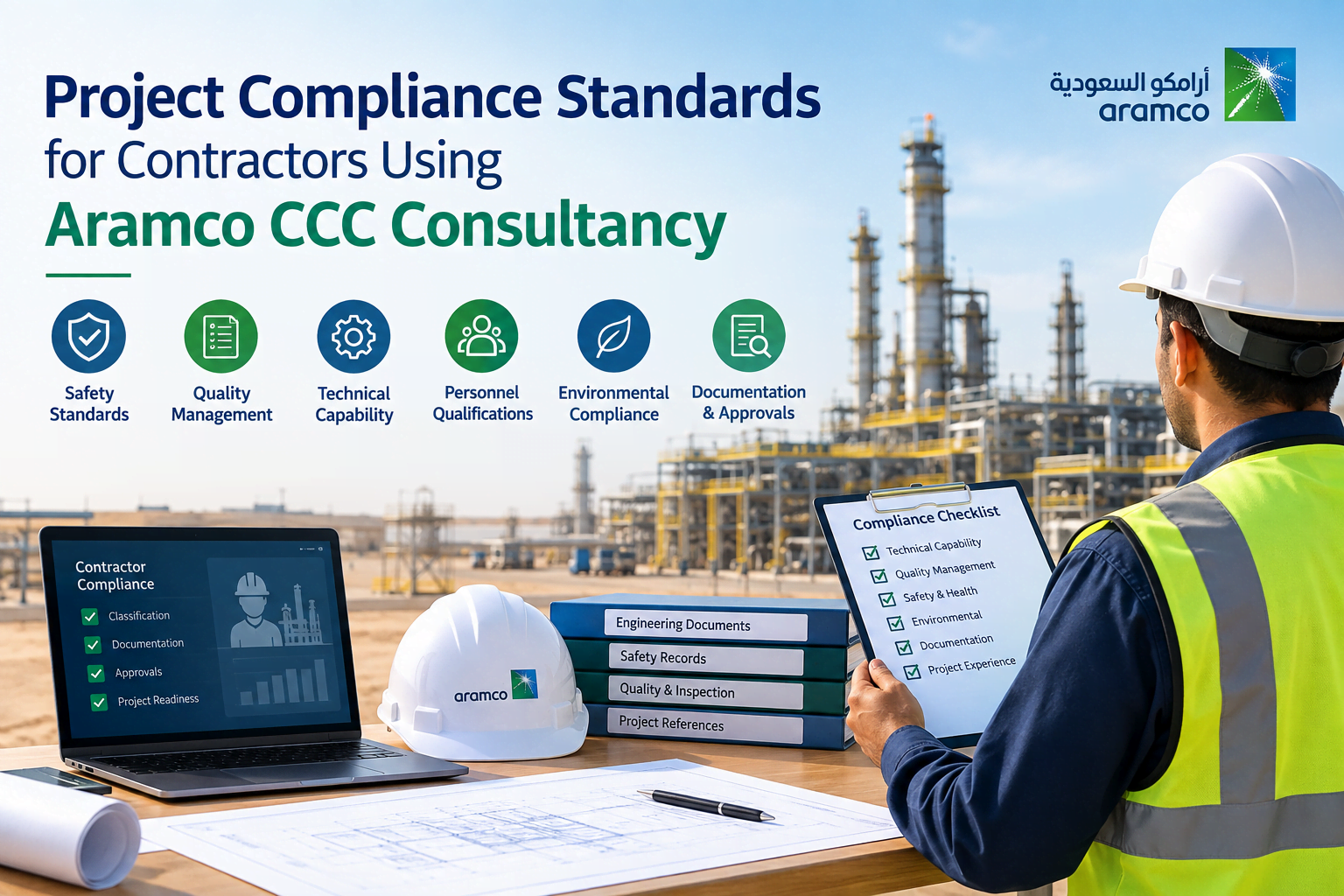
Project Compliance Standards For Contractors Using Aramco CCC Consultancy
Contractors working on industrial projects must manage more than construction activities and technical work. They also need to demonstrate that their organization, personnel, processes, documentation, safety practices, and project execution methods meet applicable compliance standards. For large industrial developments, compliance can influence contractor qualification, project participation, documentation approval, inspections, and ongoing project performance.
In Saudi Arabia, contractors involved in projects connected with Saudi Aramco may encounter additional requirements related to technical capability, contractor classification, quality management, safety procedures, engineering documentation, and project experience. Aramco CCC Consultancy can be relevant for organizations seeking to understand these requirements and prepare their documentation in a structured manner.
A clear understanding of project compliance standards allows contractors to identify requirements earlier and organize the information needed throughout the project lifecycle.
Understanding Project Compliance Standards
Project compliance standards define the requirements that contractors must satisfy while performing specific types of work. These requirements can come from project owners, government authorities, industry standards, engineering codes, safety organizations, and contractual agreements.
For industrial contractors, compliance may cover
• Technical qualifications
• Engineering capabilities
• Contractor classification
• Quality management
• Occupational safety
• Environmental requirements
• Material standards
• Inspection procedures
• Testing requirements
• Documentation
• Personnel qualifications
• Project experience
The applicable requirements depend on the project's location, industry, technical scope, client, and contractual conditions.
Why Contractor Compliance Matters
Compliance is important because industrial projects involve significant technical, operational, financial, and safety risks.
A contractor that does not meet applicable requirements may experience problems such as
• Delayed project approvals
• Additional documentation requests
• Repeated technical reviews
• Procurement complications
• Construction delays
• Inspection failures
• Contractual issues
• Increased project costs
Compliance should therefore be considered during the early stages of contractor preparation rather than after project activities have already started.
Contractor Classification and Compliance
Contractor classification can help project owners evaluate whether an organization has the appropriate capabilities for specific categories of work.
Classification related assessments may consider
• Previous project experience
• Technical disciplines
• Qualified employees
• Engineering resources
• Management systems
• Safety procedures
• Quality systems
• Financial capacity
• Organizational structure
• Equipment and technical resources
The specific requirements depend on the relevant classification system and project requirements.
Contractors should maintain accurate records supporting their stated capabilities.
Role of Aramco CCC Consultancy
Aramco CCC Consultancy can provide structured support for contractors seeking to understand and prepare for relevant contractor classification and compliance requirements.
A consultancy process may involve reviewing the organization's existing information and identifying areas that require additional documentation or improvement.
Potential areas of review include
• Company information
• Technical capabilities
• Project history
• Engineering resources
• Personnel qualifications
• Quality management systems
• Safety procedures
• Supporting certificates
• Organizational documentation
• Relevant project references
The purpose of this type of consultancy is to help organizations understand their current position and prepare information according to applicable requirements.
Technical Capability Requirements
Technical capability is an important part of contractor evaluation.
A contractor may need to demonstrate experience in specific engineering or construction disciplines.
Depending on project scope, technical capabilities may involve
• Civil engineering
• Structural engineering
• Mechanical engineering
• Electrical engineering
• Instrumentation
• Process engineering
• Piping
• Inspection
• Commissioning
• Maintenance
Contractors should maintain evidence showing how their personnel, previous projects, and technical resources support these capabilities.
Project Experience Documentation
Previous project experience can provide evidence of a contractor's ability to perform specific types of work.
Relevant project records may include
• Project name
• Client information
• Project location
• Contract scope
• Project value
• Completion dates
• Technical discipline
• Contractor responsibilities
• Equipment involved
• Project completion records
Accurate project references can make it easier to demonstrate relevant experience during qualification and compliance reviews.
Personnel Qualification Standards
Industrial projects depend heavily on qualified technical and operational personnel.
Contractors may need to maintain records covering
• Academic qualifications
• Professional certifications
• Technical training
• Safety training
• Work experience
• Professional licenses
• Role descriptions
• Previous project assignments
Personnel information should be kept current because expired certifications or incomplete records can create unnecessary compliance issues.
Quality Management Requirements
Quality management provides a framework for ensuring that project work meets defined requirements.
Contractors may establish quality procedures covering
• Document control
• Material inspection
• Supplier qualification
• Inspection and testing
• Nonconformance management
• Corrective actions
• Quality audits
• Work verification
• Final documentation
Quality requirements should be integrated into project execution instead of being treated as a separate administrative activity.
Quality Documentation for Contractors
Quality documentation provides evidence that required procedures were followed.
Examples include
• Inspection reports
• Test reports
• Material certificates
• Welding records
• Calibration certificates
• Nonconformance reports
• Corrective action records
• Audit reports
• Inspection and test plans
• Final quality records
A properly organized documentation system can help project teams locate information when it is needed for review.
Safety Compliance Standards
Safety requirements are particularly important in industrial environments where employees may work with heavy equipment, hazardous materials, electrical systems, high temperatures, pressure systems, or complex machinery.
Contractors may need safety procedures covering
• Hazard identification
• Risk assessment
• Personal protective equipment
• Work permits
• Emergency response
• Confined space entry
• Working at height
• Electrical safety
• Equipment operation
• Fire prevention
• Incident reporting
Safety requirements should be incorporated into project planning and daily operations.
Environmental Compliance
Industrial projects can have environmental impacts that require monitoring and control.
Environmental compliance may address
• Air emissions
• Waste management
• Wastewater
• Chemical storage
• Spill prevention
• Noise
• Water usage
• Soil protection
• Hazardous waste
Contractors should understand the environmental requirements that apply to their specific project and maintain appropriate records.
Engineering Documentation Standards
Engineering documentation forms a significant part of industrial project compliance.
Depending on the project, documentation may include
• Engineering drawings
• Design calculations
• Equipment specifications
• Process diagrams
• Electrical drawings
• Mechanical drawings
• Structural drawings
• Piping documentation
• Instrumentation documentation
• Technical procedures
• Inspection plans
• Testing procedures
Engineering documents should be reviewed for accuracy, consistency, and revision status before submission.
Document Control and Revision Management
Industrial projects generate large volumes of technical information. Without proper document control, project teams may accidentally use outdated information.
Document control procedures can manage
• Drawing revisions
• Technical specifications
• Approval records
• Inspection documents
• Testing certificates
• Supplier documentation
• Change requests
• Construction records
• Final project documents
Every important document should have a clear revision status and controlled distribution process.
Material and Equipment Compliance
Materials and equipment used in industrial projects may need to meet defined technical requirements.
Contractors should consider
• Material specifications
• Manufacturer information
• Product certifications
• Testing requirements
• Inspection requirements
• Material traceability
• Equipment documentation
• Storage conditions
• Installation requirements
Using materials that do not meet project specifications can result in rejection, replacement, delays, and additional costs.
Inspection and Testing Requirements
Inspection and testing provide evidence that equipment, materials, and completed work meet applicable requirements.
Activities can include
• Factory inspections
• Material inspections
• Welding inspections
• Pressure testing
• Electrical testing
• Equipment testing
• Functional testing
• Structural inspections
• System testing
• Commissioning verification
Contractors should establish clear procedures for recording test results and resolving failed inspections.
Managing Compliance During Construction
Compliance does not end when project documentation is approved.
Construction activities must continue to follow applicable requirements.
Project teams may need to monitor
• Approved drawings
• Construction methods
• Material usage
• Inspection schedules
• Safety procedures
• Quality records
• Environmental controls
• Workforce qualifications
• Equipment condition
Continuous monitoring can identify deviations before they become larger project issues.
Managing Changes and Deviations
Changes are common in complex industrial projects.
A change may result from
• Site conditions
• Design modifications
• Equipment availability
• Safety requirements
• Client instructions
• Material availability
• Regulatory requirements
Every significant change should be reviewed against applicable compliance requirements.
Uncontrolled changes can create differences between approved documentation and actual site conditions.
Compliance Gap Assessment
A compliance gap assessment compares current contractor capabilities with applicable requirements.
The assessment can identify gaps in
• Documentation
• Technical expertise
• Personnel
• Quality systems
• Safety procedures
• Project experience
• Engineering resources
• Certifications
• Organizational processes
Once gaps have been identified, contractors can prioritize corrective actions based on their importance and project requirements.
How Aramco CCC Consultancy Can Support Gap Identification
Aramco CCC Consultancy can be used as part of a structured compliance preparation process where contractors need to assess their readiness.
A gap review may examine whether the organization has
• Appropriate technical records
• Relevant project references
• Qualified personnel
• Required supporting documents
• Defined quality procedures
• Safety systems
• Organizational information
• Evidence of technical capability
The review can help identify missing or outdated information before formal submission or project qualification activities.
Compliance Checklists for Contractors
Checklists can help contractors organize compliance activities.
A contractor compliance checklist may cover
Company Information
• Legal company information
• Organizational structure
• Business activities
• Relevant registrations
Technical Information
• Engineering disciplines
• Technical personnel
• Equipment capabilities
• Previous projects
Quality Information
• Quality procedures
• Inspection plans
• Testing procedures
• Audit records
Safety Information
• Safety policies
• Risk assessments
• Training records
• Emergency procedures
Project Information
• Project references
• Contract scopes
• Completion records
• Client references
Checklists should be customized according to actual project requirements.
Digital Compliance Management
Digital systems can make contractor compliance management more organized.
A centralized system can store
• Contractor documents
• Employee records
• Certificates
• Project references
• Engineering documents
• Inspection records
• Safety documentation
• Quality records
• Approval information
Digital document management also makes it easier to monitor expiration dates and document revisions.
Task Management for Compliance Activities
Compliance preparation involves many individual activities that may be assigned to different departments.
For example, one employee may collect personnel records while another prepares project references. A technical team may review engineering documentation while the quality department verifies certificates.
Task management can help coordinate these activities.
Tasks may include
• Collecting documents
• Reviewing certificates
• Updating records
• Verifying project references
• Preparing technical information
• Resolving documentation gaps
• Reviewing compliance requirements
• Preparing submission packages
Clear task ownership reduces the possibility of important preparation activities being overlooked.
Internal Compliance Reviews
An internal review can identify potential problems before documentation is submitted for external assessment.
Internal reviews can examine
• Document completeness
• Information accuracy
• Consistency between records
• Certification validity
• Personnel qualifications
• Project references
• Technical capability
• Quality procedures
• Safety documentation
Internal reviews should involve people who understand the relevant technical and operational requirements.
Maintaining Compliance Records
Contractors should maintain compliance information throughout their operations.
Important records can include
• Updated employee certifications
• Training records
• Project experience
• Quality audits
• Inspection reports
• Safety records
• Equipment certifications
• Approved procedures
• Project documentation
Regular record maintenance reduces the need to rebuild compliance information whenever a new project opportunity arises.
Common Contractor Compliance Problems
Several problems can make compliance preparation more difficult.
Incomplete Documentation
Missing records can lead to additional requests and review cycles.
Outdated Information
Expired certificates, old employee records, or outdated company information can weaken documentation quality.
Inconsistent Records
Differences between project references, employee records, and company information can create questions during reviews.
Poor Document Organization
Even complete documentation can become difficult to use when files are not organized properly.
Unclear Responsibilities
If no employee is responsible for a particular compliance activity, important tasks may remain unfinished.
Last Minute Preparation
Starting compliance preparation shortly before a submission deadline can create unnecessary pressure and increase the risk of errors.
Building a Structured Compliance Process
Contractors can establish a repeatable compliance process by dividing preparation into clear stages.
The process can include
Identify applicable requirements
Review current contractor capabilities
Collect supporting documentation
Identify compliance gaps
Assign corrective actions
Review technical information
Verify personnel records
Check quality documentation
Review safety systems
Organize final records
Conduct an internal review
Maintain documentation for future requirements
A repeatable process makes compliance management easier to integrate into normal business operations.
Compliance Standards for Saudi Industrial Projects
Saudi Arabia's industrial environment includes major developments across energy, manufacturing, infrastructure, petrochemicals, logistics, and related sectors.
Contractors participating in these projects may work under requirements established by clients, regulators, engineering standards, and contractual agreements.
For projects associated with Saudi Aramco, contractors should distinguish between general Saudi regulatory requirements and project specific requirements issued by the relevant client or contracting organization.
This distinction is important because a requirement applicable to one project or contractor category may not automatically apply to another.
Using Consultancy Without Replacing Internal Responsibility
Consultancy can provide guidance and structured assessment, but contractors remain responsible for the accuracy of their information and the way their projects are executed.
Organizations should ensure that
• Internal records remain accurate
• Employees understand their responsibilities
• Compliance documents are maintained
• Technical information is verified
• Safety procedures are implemented
• Quality systems are followed
• Project changes are controlled
A consultancy process should complement internal management rather than replace it.
Preparing for Future Compliance Requirements
Industrial standards and project requirements can change as technologies, regulations, safety practices, and client expectations evolve.
Contractors can prepare by maintaining
• Current employee records
• Updated project references
• Organized technical documentation
• Active quality systems
• Current safety procedures
• Digital document control
• Regular internal reviews
• Compliance monitoring processes
Organizations that maintain these systems continuously may find it easier to respond when new qualification or project requirements arise.
Future of Contractor Compliance Management
Digital technologies are changing how organizations manage project compliance.
Future compliance systems are likely to place greater emphasis on
• Digital documentation
• Automated approval workflows
• Real time compliance monitoring
• Electronic inspection records
• Automated certificate tracking
• Centralized contractor databases
• Data driven compliance reporting
• Digital audit trails
Artificial intelligence may also support document classification, compliance gap identification, risk analysis, and information retrieval. However, human review will remain important for interpreting contractual requirements and making decisions involving technical, safety, and regulatory matters.
Final Thoughts
Project compliance is a continuous responsibility for industrial contractors. It involves technical capability, qualified personnel, quality management, safety procedures, environmental controls, documentation, inspections, testing, and proper management of project changes.
Aramco CCC Consultancy can be relevant to contractors seeking structured guidance around contractor classification and related compliance preparation. A systematic approach can help organizations understand applicable requirements, identify documentation gaps, organize supporting evidence, and maintain accurate records.
For contractors working on major industrial projects in Saudi Arabia, compliance should be incorporated into everyday project management rather than treated as a final approval exercise. Clear responsibilities, reliable documentation, internal reviews, and continuous monitoring provide a practical foundation for maintaining compliance throughout the project lifecycle.








0 Comments